
display:none
Best Business Structure for Online Business

Best Business Structure for Online Business

Best Business Structure for Online Business

Starting your online business

Starting your online business can be very exciting. One of the many things to think about is your business structure. It’s a great idea to think about these points to help you decide which structure best suits your needs.

  • why you are setting up your business
  • where the money is coming from
  • your long term goals for the business
  • the advantages and disadvantages of different business structures

Common business structures in Australia

It doesn’t matter where you are in the country now, the rules around your business structure will be very consistent across all the states and territories of Australia. The four most common business structures used by small businesses in Australia are:

Sole trader: You operate as the sole person legally responsible for all aspects of the business. As a sole trader you can still employ other people to help you run your business.

Company: A company is not you, it is a separate legal entity owned by its shareholders.

Partnership: Partnerships are formed by agreement rather than registration and are an association of people or entities running a business together. It is different to registering as a company.

Trust: A trust is usually formed by a Deed, but can be ‘bare’ or not documented. There are different laws that apply depending on where you are. The trust holds property or income for the benefit of others and is managed by a trustee.

**IMPORTANT NOTE: A registered business name, or even an unregistered trading name, is not a business structure. It is just a name. That business name might be used by you as a sole trader, your company, a trust you have set up, or a partnership. It is not a legal entity and provides no protection or separation between the person or entity that registers the business name, and the liabilities of the business.

Different Considerations for Business Structures

Things to think about before choosing a business structure for your online business include:

  • Are you making any money yet?
  • Cost to set up and maintain.
  • Do you have personal assets you’d like to protect and keep separate from business liabilities?
  • Are you looking for income sharing opportunities?
  • Do you want to attract outside investors into your business?
  • Would you like to be able to sell all or part of the business in the future?
  • Tax and other duties.
  • Are there future potential tax savings that could affect your choice?
  • The reporting and compliance obligations of the business structure you choose.

Different people have different priorities, so there is no ‘one size fits all’ approach to choosing your business structure. For example, if you are not making any money, your risk is likely to be low and it will be easier to operate as a sole trader. Once you are making more money than you can afford to lose, you might consider setting up a trust or a company to operate your business.

FAQs

Is it better to get my accountant or my lawyer to help me set up my business structure?

In every profession there are people with different levels of skills and experience, so it really depends upon the qualifications and experience of your advisers. Some accountants are great in their area, and some lawyers are too. Know what your goals are and ask your adviser how they can best help you to achieve your goals.

Don’t be afraid to ask if a proposed structure can be simpler! I’ve seen business structures that might have made sense at the time, but become burdensome later on and are impossible to unravel without huge cost.

Can I register a business name if I am a sole trader?

Yes! As a sole trader you can chose to operate under your own name with an ABN, like “Jeanette Jifkins, Solicitor” or you can chose to operate using a business name, like “Onyx Online Law”. You can register the business name against your sole trader ABN and then use that name in your small business. If you do use a business name, you need to register it.

Why should I register a business name for my online business?

It is an offence to operate a business under a trading name (other than your own name) if it is not registered. You can be fined up to around $5,400. You will need an ABN (Australian Business Number) before you can register a business name. Who ever has registered the ABN will be the person or entity behind the business name.

Business name registration is now managed by ASIC. You will need to set up an ASIC Connect account and login before you will be able to find a link to register a business name.

Is my domain name the same as my business name?

Your domain name might be your business name, and it might not. Probably the easiest way to work this out is to think about what name will be on the invoices you business issues. If the name on your invoices is the same as the domain name, then it will also be your business name. You will still need to register your business name, or establish a company with that name, even it is the same as your domain name.

If I have registered a domain name, do I have to register a business name?

Yes. Domain name registration has nothing to do with business name registration. You register a domain name with a domain registrar. You register a business name with ASIC.

Do I have to register my business name if it is the same as my company name?

No. Once you register a company name, no one will be able to register the same business name and you don’t need to register the same name as a business name. They might still be able to register a similar name by adding something like (Australia) to the name.

How do I find out if I can register my business name?

If you are worried about similar business or company names that are already registered, try reserving a company name through ASIC (it costs about $44). When you reserve the name it will be checked and you will be told whether or not you can have it, or if you need to pick another name.

What does ATF mean?

ATF means ‘as trustee for’ and is used when you name the trustee of a trust. The trustee is the legal ‘face’ of the trust. You can have a person or a company as trustee. In legal contracts and on financial documents you will need to use the full legal name of the trust. For example – Small Business Pty Ltd aff Online Business Ventures Trust.

You might also have registered a business name, in which case the full legal title of your online business might be – Small Business Pty Ltd aff Online Business Ventures Trust trading as Software Kings.

Do I have to write ‘trading as’ or ‘t/as’ on my website?

‘t/as’ means ‘trading as’. You do not have to put the full legal name of your business on your website. Provided you have a registered business name and an ABN, that is all you need to use. So from the example above, instead of writing Small Business Pty Ltd aff Online Business Ventures Trust trading as Software Kings ABN 00 123 456 789 you can simply put Software Kings ABN 00 123 456 789 on your website.

It is a lot simpler to simply use your trading name and ABN than your full legal name and avoids the problem of messing it up. People who don’t understand their business structure will sometimes mix up what entity is ‘trading as’ and which one is a trustee.

Can I register more than one business name to my company?

Yes you can. If you want to operate a variety of sub-divisions or small business units within your company, you simply register a business name for each unit using your company ABN. You can then trade with the different trading names, but each trading name will have the same ABN.

Can a trustee company run a business?

When you establish a company for the purpose of being a corporate trustee, that should be the company’s sole purpose. If you also want to trade through a company, you should establish a separate company to do that.

As a corporate trustee, a company is responsible for managing the business or assets of the trust for the benefit of the beneficiaries of that trust. The trustee does not own the trust property, and the trustee can be changed.

How can Onyx Legal help you?

if you would like one of our team to help you make sense of your current business structure, or set up a business structure to suit your needs.

Compare Crowdfunding in Australia

Compare Crowdfunding in Australia

Compare Crowdfunding in Australia

Crowd Funding concept with smartphone on white table

What is crowdfunding?

Crowdfunding is about enabling other people to support your cause or idea by donating money to you.  Some fundraisers offer perks or rewards in exchange for donations, some don’t.

Organisations that have deductible gift recipient (DGR) status can provide tax deductible receipts for donations of over $2, provided that no perk or reward is offered in exchange for that donation.

In Australia there are strict regulations around offering shares or interests in a company as part of a crowdfunding campaign. Only angel investment platforms with financial services licences are able to support this.

What is the risk?

As a donor you are warned against giving money to crowdfunding campaigns in case they are a scam. Statistically, most are not scams but genuine efforts by people or organisations to fund particular projects or ongoing activities.

Australians reported spend $20billion per year on gambling. With those statistics I am constantly surprised that crowdfunding gets such a bad rap. If we could divert even a fraction of gambling revenue into crowdfunding campaigns (same risk) the potential for growth in innovation is huge.

As a fundraiser, your greatest risk is not grabbing the attention of the public and failing to reach your funding goal. One way to mitigate this is to use crowdfunding platforms that permit flexible campaigns where you receive the funding regardless of whether you reach your target or not.

Chose a platform that is currently active; you don’t want to put time and effort into a great campaign only for nothing to happen with it. For example, Cleantechfundr doesn’t appear to have any activity since 2014.

What are the crowdfunding laws in Australia?

Crowdfunding has worked without government interference or regulation up until now, but in late 2015 the Australian Government had before it draft legislation that would regulate ‘crowd-sourced funding’ (because calling it ‘crowdfunding’ like everyone else would be too sensible).

Fundraising in a traditional sense is covered by the Corporations Act and the rules are enforced by the Australian Investments and Securities Commission (ASIC).  If your campaign is seen to be promoting a financial product (shares, insurance, mutual fund) then you will have compliance obligations and crowdfunding is probably not your best bet.

Where you are collecting a donation and offering nothing more than a nominal reward in return, you are unlikely to have to comply with Corporation Act.

The draft legislation (Corporations Amendment (Crowd-sourced Funding) Bill 2015) proposed that ASIC would have regulatory oversight of crowding in Australia where the fundraising results in the people gaining an interest (shares) in a public company. There was nothing in that draft legislation that affected crowdfunding by proprietary companies, associations or individuals. That Bill has now been shelved (2016).

Other laws that affect campaigns are consumer protection laws. When you promote what you plan to do with the money, you have to be accurate in what your telling people. If what you say is later found to be misleading and deceptive you may be liable to pay fines as well as refund money.

You do have to own or have the right to use any content you include in your campaign to avoid infringing intellectual property laws.

Some states of Australia also require organisations (unless exempt) to obtain a fundraising licence if collecting money for a charitable purpose. These states are:

•    Western Australia (any amount)
•    Victoria (>$10,000 per financial year)
•    Tasmania (for individuals & organisations not incorporated in Tasmania)
•    South Australia (any amount)
•    Queensland (any amount)
•    New South Wales (any amount)
•    Australian Capital Territory (>$15,000 per year)

‘Charitable purpose’ doesn’t appear to cover ‘developing a business or business idea’ but it is worth checking with the appropriate state based regulator to work out whether or not you are covered. A useful resource for this is Fundingcentre.com.au for fundraising legislation and regulations for not-for-profits.

How do crowdfunding platforms work?

Crowdfunding platforms usually collect the money before passing it on to the fundraiser, and will only pass it on under certain conditions. Where a fundraiser has listed an all-or-nothing campaign, the people pledging money are often not charged until the campaign has reached the funding goal. With a flexible campaign, funds raised are handed over whether or not the goal is reached.

Crowdfunding platforms don’t take responsibility for the funds raised. If a fundraiser has offered perks or rewards in exchange for money raised and they don’t deliver, donors have to pursue the fundraiser rather than the crowdfunding platform.

Why crowdfunding doesn’t always work in Australia

You can’t enforce a pledge under Australian law. We have a system where there has to be a mutual exchange before a contract can be enforced. The exchange doesn’t have to be for equal value, it just has to occur.

So, if you are crowdfunding in Australia and you want to be able to collect all of the donations pledged to your campaign, you will usually need to offer and provide something in exchange. This is why a lot of campaigns offer promotional material in exchange for donations.

Realistically, the cost of enforcing small donations is likely to be prohibitive, so it is still an exercise in trust in hoping that people will meet the promises they have made. For this reason, platforms that do not have a minimum cap for collection of funds offer a lower risk to crowdfund fundraisers. If you are able to collect the funds as soon as the donor has the impulse to buy, you are less likely to lose collections because people change their mind at a later date.

What can’t I crowdfund?

Each crowdfunding platform sets out different categories of product or service they won’t allow you to start a campaign for. These usually cover things like illegal activities, adult material, tobacco or alcohol products, financial products, optional medical procedures, gambling and so on.

Different types of platforms

Not all crowdfunding platforms support every idea. Some platforms are aimed at creative projects, some social enterprise or charitable projects and a few are designed to connect small investors with start-ups in exchange for an interest in the company. Below is a PDF showing a selection of different types of crowdfunding platforms available in Australia.

There are a few other platforms promoted as crowdfunding or small investment opportunities (like BrickX and Thinkable) that don’t fit the usual crowdfunding framework are not included.

Download your Crowdfunding Australia comparison table here – crowdfundingpdf

How can Onyx Legal help you?

The minimum legal terms you NEED for your website

The minimum legal terms you NEED for your website

The minimum legal terms you NEED for your website

Website Terms and Conditions

Today we’re talking about the minimum legal terms you need for your website.

The reason you would have a legal terms on your website is to reduce the risk to your business, so it’s not a small thing. It’s actually really important to the viability of your business into the future.

For an example,  I recall a man in the UK who got sued by a company in the US out of a court in Australia because of comments he made on his website. He had no legal terms to protect himself.

One of the key things you can do is use your Terms of Use is to designate your governing law, the relevant law for your website. So if you’re based in the US, you want some law relevant to the US. If you’re based in the UK, you want it in the UK. If you’re in Australia, you want it in Australia. That’s one key thing that Terms of Use can do for you.

The other thing is privacy. Privacy is pretty important.

There are a lot of people out there concerned about how that information is used. Whether you are legally required to protect your client’s privacy or not, it’s a really worthwhile investment to do that.

The quickest way to notify people how you do that is to have a Privacy Policy on your website.

The more products or services you offer through your website, the more terms and conditions you can use to help limit the risk to your business and to better manage the expectations of your customers. 


How can Onyx Legal help you?

We can help you in putting together both the Terms of Use and a Privacy Policy. We can also talk to you about any other terms and conditions you might need for your website.

5 Tips for Managing Privacy Online

5 Tips for Managing Privacy Online

5 Tips for Managing Privacy Online

Protecting the privacy of your customers and clients online doesn’t have to be complicated. Admittedly, if you attract the attention of hackers you could run into trouble fast (just ask Ashley Madison).

Here are 5 simple tips about privacy online to help you meet compliance with Australian Privacy laws, and give your clients the confidence to share their details with you. And it’s not just online. If you’re collecting personal information anywhere in your business it should be protected and handled in a way that is consistent with your privacy policy.

How can Onyx Legal help you?

We can help you in putting together both the Terms of Use and a Privacy Policy. We can also talk to you about any other terms and conditions you might need for your website.

5 Tips for Managing Privacy Online

Copyright Online & Trademarks Online Infographic

Copyright Online & Trademarks Online Infographic

Legal Essentials for Business Online

One of the 7 Legal Essentials for doing business online is understanding how to use Copyright and Trademarks so that you don’t run in to legal trouble.

We’ve put together this simple legal infographic to help you out with:

  • 5 Things You should know about Copyright Online (legal infographic)
  • 5 Things You should know about Trademarks Online (legal infographic)

How can Onyx Legal help you?

If you’d like to understand how to protect your business copyright or trademarks, or defend a claim that you have infringed someone else’s rights, then

How To Use Copyright Images On Your Website And Avoid Legal Claims

How To Use Copyright Images On Your Website And Avoid Legal Claims

How To Use Copyright Images On Your Website And Avoid Legal Claims

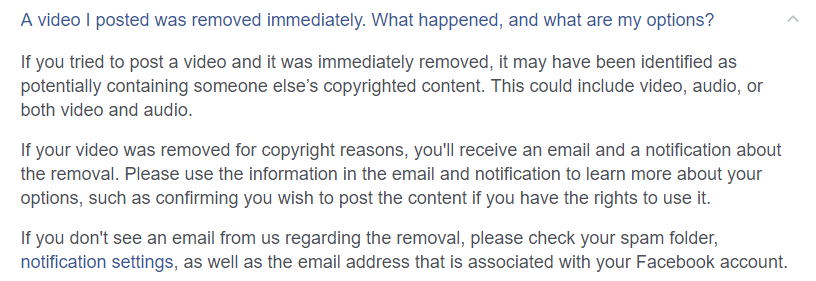
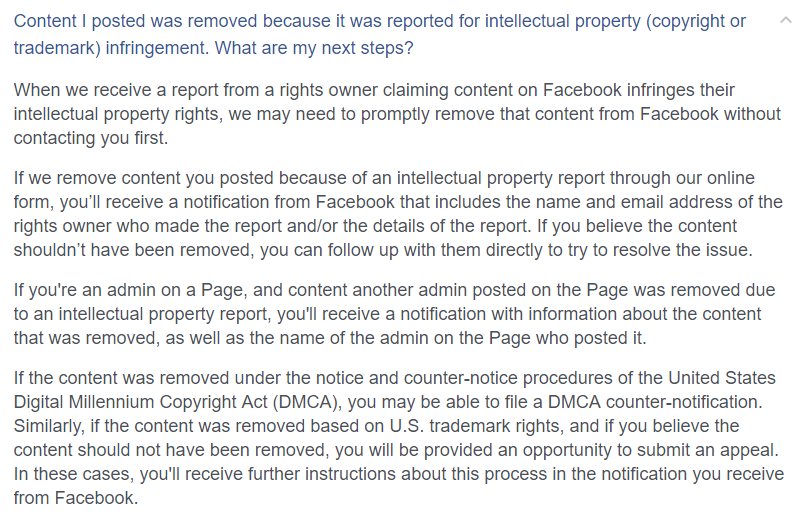
Your Company has been Using Unlicensed Copyright Images

I’ve been getting lots of questions lately about what you can and can’t do with copyright images you find online. Loads of people seem to think that just because an image shows up on a Google search it must be available for use for free. It is a common misunderstanding and now that technology has caught up, is likely to get a few people in trouble.

You might be one of those businesses who got a web developer to put together a website for you years ago, and relied upon them to sort out your images. Actually, it might not have been that long ago!

Do you know where your images have come from?

Just last year my 74 year old mother wanted a website for her Life Coaching business and briefed a small independent developer to do it for her. The very helpful and inexperienced developer said she’d look after the images and told Mum not to worry about it. When I looked at the website I was immediately really worried – all stock images (some still showing watermarks) and no licences or permissions!  My immediate concern was to avoid getting any legal demands for payment for breach of copyright and a take down notice. We’ve since replaced all the images with appropriately licenced copies.

Before digital cameras, photographs weren’t likely to be shared

Copyright is something that is automatic. When a photographer takes an image, they have copyright in that image. Yes, there are exceptions, but let’s stick with the basics for now.  So if you take a photo, you own copyright in that image. Would you be OK if other people used your image to promote their business? Or would you send a legal letter of demand?

In the old days before digital cameras and Facebook, you had to get your photographs processed at the local camera shop or pharmacy. Then they moved into supermarkets, and now you can order your prints online and get them delivered in the post, if you get them printed at all.

When photographs were only really shared in hard copy, it was much easier to keep track of copies and how they were used. Today, you might share a photo on Facebook, Pinterest, Instagram or any one of a number of other social networking sites and think that no one will use it. That happened to a family who have a daughter with Down syndrome who is quite ill and undergoing life-saving treatment. They rarely posted photographs and when they did it was meant only for close friends and family.  Just one image they posted was taken by an unknown person and uploaded to a stock photo website.  The company that used the photo was advertising a prenatal test that often leads to abortions. It is not the first time a photo of a child with a disability has been misused.

Mother horrified after a company used photo of her young daughter for an offensive ad

Can you imagine how you would feel if you were incredibly protective of a member of your family, and suddenly saw their image plastered all over advertising at every bus stop and tube station you went past? All without your knowledge or consent. That is what happened to that family. The company using the image in their promotion were naturally equally distressed. They had followed the rules (about purchasing images, not about being sensible how they use them) and still ran into trouble!

With digital cameras and social media it’s so easy for images to spread internationally, overnight. That is the problem.  Because images are easily accessible, people think they are free. But the same rules that applied when images were hard copy, apply today.

See a picture you like – What should you do?

What a lot of people do is use a copyright image without any thought for the consequences. Most people have no idea they are doing anything wrong. The trouble is, that can come back and bite you! You could get a legal letter of demand any day!

People complain that if you put an image out there, you should want to share it. This isn’t limited to images. A company in South Australia recently announced that they have lost $3,000,000 in sales due to the illegal download of just one of their publications. Could you afford to lose that much from your business? Do you still feel that anything you find online should be free to share?

Copyright is meant to protect the livelihood of the author, artist or creator

So, what should you do if you find an image you like online, before you plaster it on your website or social media post?
Firstly, get permission.

Yes, getting permission can be a complete pain in the @rse. Speaking from experience, it is particularly difficult to get permission to use stills from movies. I don’t know why movie houses make it so hard. Maybe the studios that produce those movies don’t recognise the need, don’t care or don’t want people to use stills from their movies. Hey Dreamworks! There is potentially a whole added industry in stills, just saying…

Anyway, sorry, back to the topic at hand –

Getting permission

If you purchase stock images, you get permission in the form of a license to use that image. You’re not actually buying the image like you would a postcard; you are buying a limited copyright license attached to the image. All of the images in this post are subject to copyright license. An example of some license terms include:

  • …a non-exclusive, royalty-free, perpetual, worldwide, non-transferable sub-license to use, reproduce, modify and/or display the Work, for any purpose other than as prohibited…
  • By way of example, the above license may include the use, modification and/or display of the Work in connection with the following… Business and commercial purposes…
  • …may post and/or upload the Social-Media Enabled Works directly onto Social Media Websites and Applications as long as…
  • For greater clarity, it is noted that reproducing the unmodified Work on mugs, t-shirts, posters, or other similar merchandise for resale is not permitted, as primary value would still lie in the Work itself.

So, check the copyright license terms of your stock image or clip-art provider. Note that some have copyright terms that are time limited, rather than perpetual.

What if it is not a stock image?

If you want to use an image from somewhere else, you need their permission. If the owner is easy to find, then asking directly and keeping a copy of their written consent, is the easiest way to prove that you did have permission to use the image and the time you used it.

It is your responsibility to know the origin of your copyright images and to have the right permissions to use those images online.


How can Onyx Legal help you?